Tag Archives: coping with cancer for kids
Coping Strategy #9
Art Therapy!
Something that always calms me down and gives me time to gather my thoughts is anything artsy or craftsy! I have learned that this really helps when coping with your parent’s cancer.

Recently, I started scrapbooking memories of my dad so I could hold on to them and cherish them forever. DIY (Do It Yourself) projects are also fun because you get to be as creative as you want and you save money! There are a ton of DIY projects that could help cancer patients too! For example, if your parent or loved on is going into surgery or is in the hospital, you can sew them a little pillow and blanket with a pattern that they would appreciate. They would also feel more ‘home-y’ and less ‘hospital-y’. Another great example is knitting beanies or something similar for patients who have lost their hair.
If you have a sick parent, grandparent, etc. I think it would be therapeutic to do an art project with them. This way, both parities can let out emotions while creating memories during a tough time. Studies show that art therapy helps a sick patient by reducing anxiety levels, improving social skills and communication, and controlling the pain in a better way.
Stay positive and keep spreading those smiles! For more DIY ideas for cancer patients, email copingwithcancerforkids@gmail.com!
I Wear Red for Your Heart and for My Heart
Heart disease is the number one killer in women. And unfortunately, heart attacks, heart failure, and other types of heart diseases are too common in both genders. Because it is so prevalent in many lives, it is so important to be educated on an unhealthy heart and to know what to do when an unfavorable situation comes upon you.
Recently, I was blessed to be able to help raise awareness about this deadly disease. Students wore red and gathered around at a specific time to get educated on a healthy heart, and to educate others!

Some Symptoms of Heart Disease:
Coronary Artery Disease, Heart Attack, Arrhythmias, Atrial Fibrillation, Heart Valve Disease, Heart Failure, Congenital Heart Disease, & Heart Muscle Disease:
- Shortness of breath
- Palpitations
- Fast heartbeat
- Weakness/dizziness
- Nausea and sweating
- Discomfort and pain in the chest, back, jaws, or arm area
- Fullness or heartburn feeling
- Rapid or irregular heartbeats
- Weakness/dizziness/fatigue
- Pounding/discomfort in chest
The Importance of Knowing CPR:
I personally think knowing CPR is extremely important. I strongly recommend everyone to get certified in this as soon as possible. Unfortunately, no one can predict the future. You might be sitting in a restaurant and the person behind you chokes or you might be sitting in your house when a loved one experiences a heart attack. By getting certified in CPR, you can save a life. You can make a difference. You can be a hero to a family.
Treatment:
There are many medications and surgeries doctors can do to help a bad heart. For example, doctors can put in a stent for weak hearts to help with the flow in arteries. Doctors can also perform bypass surgery when arteries are blocked.
Take Care of Your Heart:
It is extremely important to be going to the doctors for regular check ups. Also, never skip any medication a doctor has prescribed. Live a healthy lifestyle. Walk more and eat right. For more on a healthy lifestyle, check out: https://copingwithcancerforkids.wordpress.com/2014/01/20/how-and-why-to-be-healthy/
Keep a healthy heart, help others keep a healthy heart, and spread those beautiful smiles!
World Cancer Day
Happy World Cancer Day! This day is not only dedicated to spread general knowledge about cancer, but to factor out myths and misconceptions about this deadly disease.
Here are a few cancer myths:
- Undergoing treatment means you cannot do your usual activities and live a normal life– Undergoing treatment means things will change in your life. There is a high change there will be new norms to adapt to. However, you can still do the usual activities and try to live a life that is as normal as possible under the circumstances.
- Every cancer patient gets the same treatment– Treatment comes in different shapes and forms. Common treatments include chemotherapy, radiation, and surgery. Not all cancers get the same chemotherapy drugs. Also, even if the cancer is the same as the next person the drugs still might be different. Radiation and surgery are applicable to only some patients depending on the stage of the cancer.
- To prevent skin cancer, one just has to apply one layer of sunscreen in the beginning of the day– It is really important to apply multiple layers of sunscreen throughout the day. Applying one layer of sunscreen in the morning won’t be much of a benefit if you are outside throughout the day. Skin cancer symptoms start appearing years later. Skin cancer is cumulative and stays in the deep layers of the skin. It’s extremely important to reapply sunscreen of SPF 15 or more and protect your skin.
- Household bug spray causes cancer– This statement has been proven false. Using these products occasionally cause no harm and there is no relationship with cancer diagnoses.
- There is a higher chance of being diagnosed with lung cancer when living in a polluted place, rather than being a smoker– Being a smoker causes a higher chance of being diagnosed with lung cancer than those living in a polluted place. Smoking is the number one cause of lung cancer.
- Some injuries cause cancer– One might go to the doctor for an injury and during the same time, the doctor finds a tumor of some sort. This does not mean an injury is the reason for the tumor. Also, if there was a bad injury earlier in life and cancer detection later on there is no way that the cause of the cancer was because of that previous injury.
- Electronic devices cause brain cancer– Although many people believe this, there is no consistent finding that allows scientists and doctors to believe electronic devices cause brain cancer. Ionizing radiation may cause one’s DNA to change, leading to cancer. However, with smaller electronic devices there are no DNA changes.
- Lifestyle changes won’t affect the chance of being diagnosed with cancer– A lot of things play the part of the reason of a cancer diagnosis. Often times, one could be lifestyle. An excessive amount of anything is bad for you. Too much alcohol can damage your liver. Too much smoking can damage your lungs. I believe everything is okay in moderation. It is important to limit yourself to the things you know that cause cancer. An important thing to have in your lifestyle to avoid cancer is of course exercise. Your lifestyle does play a role in the chances of being diagnosed with cancer. This is why it is vital for yourself to take care. It is important to eat right, exercise a healthy amount, and go to the doctors on a regular basis while getting the necessary tests.
The Ugly Truth About Chemotherapy
The weight loss. The fatigue. The nausea. The metallic taste. The hair loss. The appetite changes. The pain threshold changes. The mouth and throat sores. The numbness in the hands and feet. The swelling. And many, many more.
How do you watch your parent go through these side effects (sometimes more, sometimes less)? How do you sit there at work and know the pain that your parent is going through or gone through? How do you study in school knowing how much your parent is suffering or suffered? How do you smile while cancer is ripping your life apart?
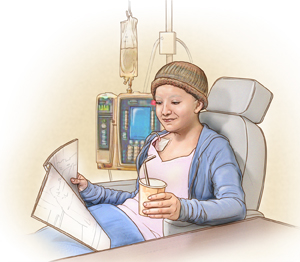
I remember the first time I took my father to chemotherapy. At the time, I was just 16 years old. It was his third round of chemotherapy. A few hours into the session, something went wrong with the patient sitting across my dad and all the doctors ran in and closed the curtain. I saw that he was shaking uncontrollably and he practically turned purple. I could not handle it. I kept thinking to myself that the same thing would happen to my dad. I couldn’t breathe. I started shaking. I was beyond terrified. I felt like I was going to faint. At the time, my dad fell asleep. (I’m happy he was napping at the time because I would hate for him to see me like that.) I somehow found the energy to walk to the elevator and go down to the parking lot for some fresh air. I called my mom crying my eyes out. I kept saying, “I can’t do this. I can’t do this.” I let all my feelings and tears out. It took me a few minutes, but I pulled myself together and walked up the stairs to my dad. He just woke up from his nap. I acted like nothing was wrong and started a pleasant chess game with him. He won, as usual.
Each time your parent (or loved one) goes to chemotherapy a piece of your heart dies. It feels like the cancer punched you so incredibly hard and literally reached into you and cut out a piece of your heart.
I wish there was something I could do to ease you from this pain. Unfortunately, it’s just part of the cancer. If you cannot handle it, then I suggest leaving the room. Do not bring down your parent. They need your support. Give them the motivation to fight this disease. Fight this disease with your parent and never quit. Do everything in your power to help your parent become a survivor. Take them to chemotherapy. Put up with their mood swings. Give them the food they need to help with the nauseous feeling. Take care of your parents. Always take care of yourself too! Cancer is always going to be a distraction in school and work but try your best and that’s all anyone can ask for.
As awful as all of this feels at the moment, it’s better than having your parent gone. There were many times where I mentally had a difficult time taking care of my dad, but now that’s all I want to do.
National Cervical Cancer Screening Month
January is National Cervical Cancer Screening Month! Cancer-fighting organizations stress the importance of screenings for Cervical Cancer during this time.
Here are a few facts about Cervical Cancer to raise awareness:
- Cervical Cancer is the second most common type of cancer found in women.
- Cervical Cancer is one of the most treatable cancers.
- About 12,000 women will be diagnosed with Cervical Cancer per year.
- About half of the patients are between the ages of 35 and 55.
- Cervical Cancer can be diagnosed through the Papanicolaou (Pap) test.
- Doctors suggest getting the first Pap test at the age of 21 and the last one at the age of 70 with about three year intervals.
- Cervical Cancer be treated through surgery, radiation therapy, and chemotherapy.
Always share these facts about Cervical Cancer to spread awareness and stop the battle against cancer. Sharing this post could save someone’s life! You would be saving a whole circle of family and friends from a roller coaster of emotions.
New Year’s Resolutions
Happy New Year! I know that this post is about 8 days overdue and I apologize.
With a sick or lost parent, there is always something to do. And with those things to do comes potential improvements. Here are some ideas that might help you get through this cancer-stricken year!
New Year’s Resolutions for cancer patients:
- Gain healthy weight- I know that with chemotherapy and the stress of cancer it is natural to lose weight. But remember, you must be strong for your next round of chemotherapy! Try to gain healthy weight. For example, try having Full-Fat Greek Yogurt with lots of fruits as many times a week as possible.
- Tell your family what’s going on- Your family is there to help you and they genuinely want to. Don’t hide your diagnosis and doctor’s appointments from anyone.
- Ask your doctor- If you don’t understand what your doctor is saying or if you want more details, just ask. I know many cancer patients don’t know how to ask certain questions about their diagnosis and prognosis, but always remember that oncologists want to help you. Also, don’t feel bad to get a second opinion.
New Year’s Resolutions for those coping with a loved one’s cancer:
- Do something for yourself- Treat yourself to something nice every now and then because you deserve it. Cancer is beyond hard to deal with. Without giving yourself a break, you will start to resent your situation.
- Take care of yourself- I know how busy you are taking care of your sick loved one, but don’t forget to take care of yourself! Eat right and exercise well. Stay healthy for your parent(s)!
- Volunteer- Being able to volunteer with cancer organizations is so fulfilling. I highly recommend it to those coping with this deadly disease.
To both groups:
- Join a support group- Join a support group and ask for help. You will meet many others who are in a similar situation. You will feel less alone, you will be able to vent in a healthy way, you will meet people who finish your ______. (sentences)
- Talk about your feelings- Tell your family how you feel and how much you love each other. This life is too short for you not to say, “I love you.” every single day.
- Save someone- You know what cancer does to a family. You have seen the ups and downs of it. Save someone and make sure they get their screenings and tests when required.
- Be positive- Don’t fret over things that are not in your control. People are going to say insulting things about cancer. People are going to insult the way you are coping with your cancer story. Walk away because you don’t need anymore negativity in your life. Surround yourself with positivity and do the best you can do while coping with cancer.
The Holidays
The holidays with a sick parent or a recently deceased parent is undoubtably challenging. In my opinion it is one of the hardest times throughout the year.

Here are some tips that will help you get through this time:
- Start a new tradition- Because of cancer, you and your family might not be able to do everything you used to before the cancer. Start a new tradition. Maybe you could make cancer ribbons and hang them on your Christmas tree!
- Be a giver- After my experience with cancer, I have become so thankful and grateful for the smallest things in life- thankful and grateful for things most teenagers won’t even realize we are blessed to have.
- Do something for yourself- It is the holiday season! Just because you are dealing with this obstacle, does not mean you are not allowed to have fun and celebrate the holidays.
- Tell your family/friends if you do not feel like participating in certain things- Even though you should be having fun and celebrating everything, it is totally understandable if you don’t feel like it. Remember, no one expects anything. If you are not in the mood to go do something, then don’t. This time of the year is hard with a sick parent or a deceased parent and most people understand that.
- Don’t expect much- In whatever situation you might be in, it is natural for cancer and everything that comes with cancer to dictate many family decisions. Do not expect too much out of your sick or healthy parent. They are trying their best to please you during this hard time!
- Set goals- With New Years coming up, I suggest setting goals. Set goals about cancer. Maybe your goal will be taking your parent to a certain number of chemotherapies or maybe it will be honoring a parent who passed away from cancer in a new and creative way. My cancer related goal is to help a certain number of kids and teenagers who are having trouble coping with their parent’s cancer.
- Spend time with your family- After having cancer play such a big part in your life, I am sure you understand how important it is to spend time with your family. So, spend as much time with your family as you possibly can!
- Keep the holiday spirit- Cancer does not define you or your family. Make sure to have fun and still keep the holiday spirit going, despite these stumbles.
Happy Holidays! I hope everyone has a great holiday season while coping with cancer the best one could!
National Lung & Pancreatic Cancer Awareness Month
November is National Lung Cancer Awareness Month and National Pancreatic Cancer Awareness Month! During November, cancer organizations put on events to help fight these diseases and raise funds for research.
Here are a few facts about Lung Cancer to raise awareness:
- When it comes to cancer deaths, Lung Cancer takes the lead.
- More men than women are diagnosed with Lung Cancer every year.
- Active smoking is responsible for 90% of Lung Cancer patients.
- If one is exposed to second hand smoke on a daily basis, their risk for Lung Cancer increases from anywhere between 20-30%.
- Those who work with cancer causing agents, such as asbestos, arsenic, and radon, are also at a higher risk of being diagnosed with Lung Cancer.
- Lung Cancer is often diagnosed through a lung biopsy, sputum cytology, bronchoscopy, mediastinoscopy, thoracentesis, CT scan, or PET scan.
- Like most cancers, Lung Cancer can be treated though surgery, chemotherapy, and radiation.
Here are a few facts about Pancreatic Cancer to raise awareness:
- Unfortunately, Pancreatic Cancer has a low survival rate compared to other types of cancer.
- Family history of this disease, smoking on a regular basis, consuming alcohol on a regular basis, having a poor diet and having diabetes are major risk factors for this deadly disease.
- Pancreatic Cancer is usually diagnosed through a physical exam, biopsy, ultrasound, MRI, or an X-Ray.
- Pancreatic Cancer can be treated through surgery, chemotherapy, radiation, immunotherapy, and gastroenterology.
Share these facts about Lung & Pancreatic Cancer with your friends and family to spread awareness and to help prevent these diseases. These types of cancer are extremely deadly, painful, and scary. It is so important that everyone is well-informed about the major facts. Always remember to support all types of cancer throughout the whole year! We are all in this fight together.
Looking at Before and After Pictures
One of the hardest things while coping with this awful sickness is looking back at pictures from the time your parent did not have cancer and immediately noticing the changes that the disease has brought on. It’s hard seeing that transition of your own parent from a healthy and active person to a cancer-stricken patient.
When I look at recent pictures of my dad, I see the cancer in him. I see the wrinkles that came in the last two years; I see the defined cheek bones and sunken-in eyes due to the weight loss; I see the peeling hands and feet from the chemotherapy; I see the cancer. To protect myself from more pain, I try not to look at those.
It’s especially hard because if you lost your parent (or loved one) to cancer, your most recent and vivid memories are petrifying. You remember the weakness, the throwing up, the change of temper, and all the other chemotherapy affects. As difficult as it is, it is so important to remember your loved one in a healthy form. It’s going to be a struggle rewinding to a couple years ago, but it will be a healthier way of grieving (or dealing with this new change in your life). Always remember that cancer doesn’t define a person. Stay positive and spread smiles!
 Coping with Cancer